

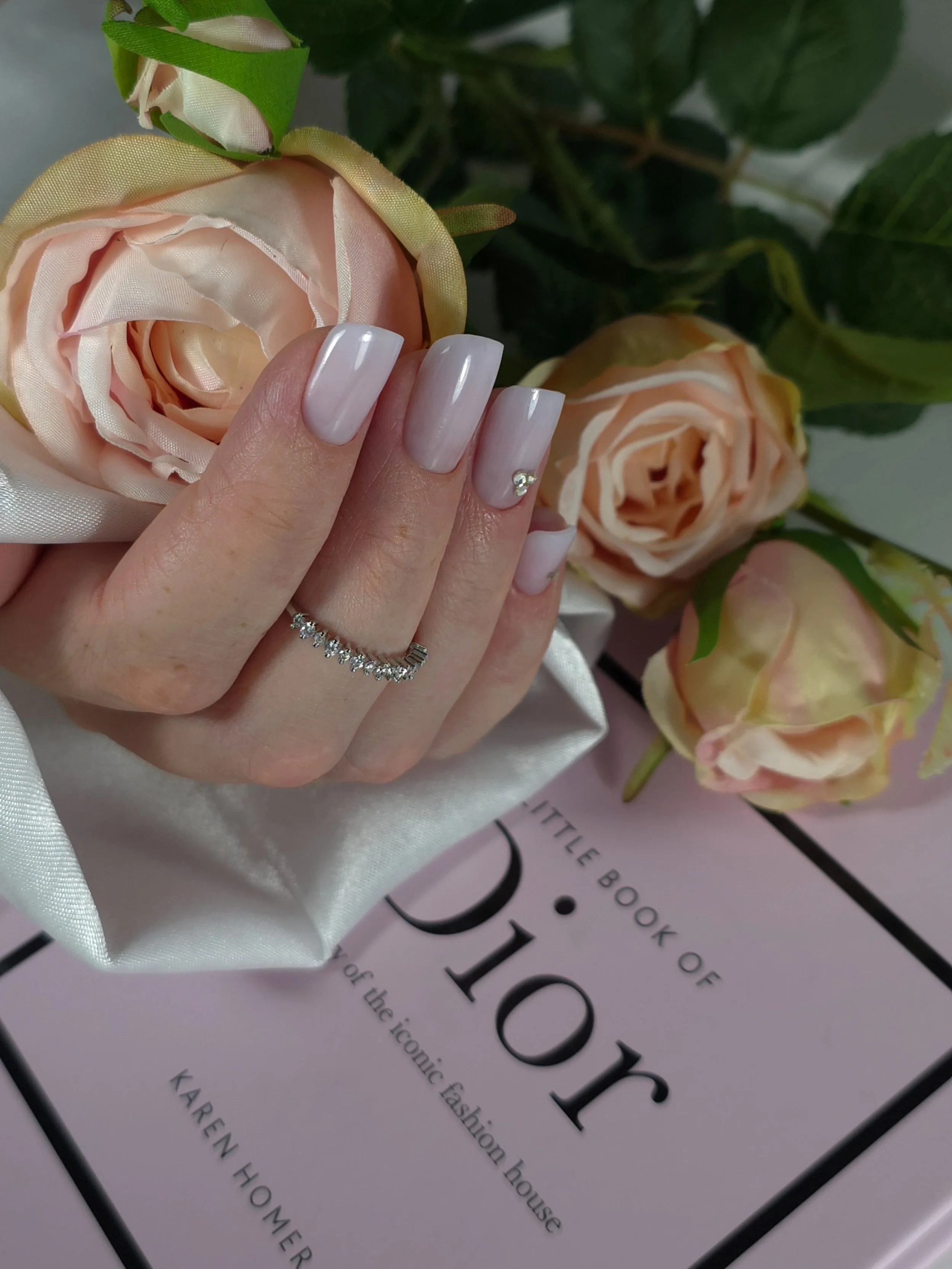
Hybrid technique:
The underdog of the mani-sphere?
Our unsung hero and the answer to SO many retention issues!
Hybrid technique
✳︎
Expert prep
✳︎
Photo-ready finish
✳︎
Perfect results
✳︎
Gel polish
✳︎
Hybrid technique ✳︎ Expert prep ✳︎ Photo-ready finish ✳︎ Perfect results ✳︎ Gel polish ✳︎
-
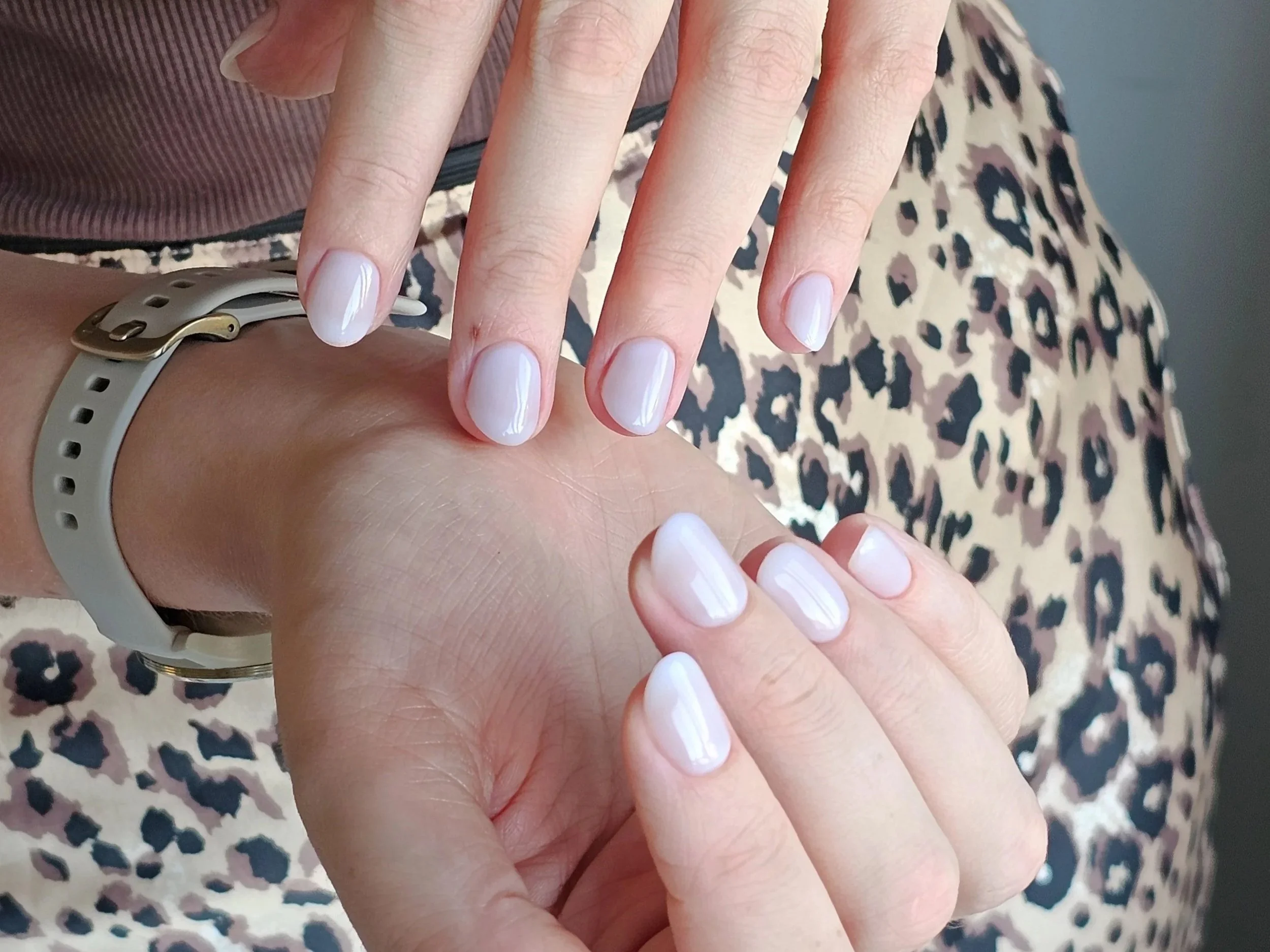
Unlike the other treatments that use either hard OR soft gel, the hybrid technique uses both!
Why is this beneficial?
For clients with flexible nail types that also require reinforcement (i.e. damaged side walls, trapezoidal nail shape etc) this technique provides the strength from the hard gel around the lower two thirds of the nail, but uses soft gel around the cuticle area where your nail is most flexible.
-
The hybrid technique is pretty much suitable for everyone, however it is not required for everyone, and it’s quite labour intensive so you may find other options that work for you which are more cost-friendly!
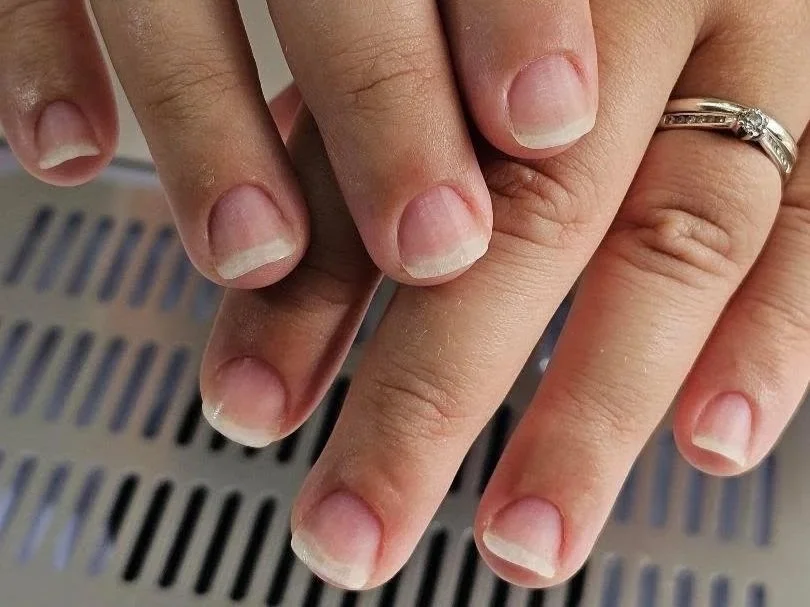
Typically, I’d recommend you book this treatment if you have trapezoidal nail shape, or have problematic nails. Go through the checklist below to see if you might benefit from this treatment.
1. Do you have bitten or very short nails?
Hold your finger straight and parallel to the floor or ceiling and look at your nail from the side. Does the fleshy part of your fingertip sit higher than the nail plate?
If so, there may not be enough nail plate available for the hybrid technique to be applied appropriately. Send me photos if you’re unsure so I can recommend the right treatment!
2. How do your side walls grow?
Look at your nail from above. Do the side walls run relatively parallel from the cuticle towards the free edge, or do they flare outwards as the nail grows?
You can also point your finger towards yourself and look directly at the nail from the tip. If the nail plate appears particularly flat or the side walls flare significantly, this may indicate you have trapezoidal nails.
3. Do you have any areas of nail lifting?
Look at where the free edge of your nail meets the skin at the sides. A small amount of white at the free edge is completely normal. However, if the white area appears to extend down the side walls rather than following the natural free edge, this can indicate that the nail plate has lifted from the nail bed (onycholysis).
If you answered yes to points 2 or 3, Hybrid technique is most likely the best treatment for you.
If you notice anything that looks unusual, please don't worry or try to diagnose it yourself. I'll be able to assess your nails during your appointment and advise you on the most suitable treatment.
-
Pros
Added strength and flexibility – ideal if you want to maintain a short-medium length, but need extra support as the nails grow.
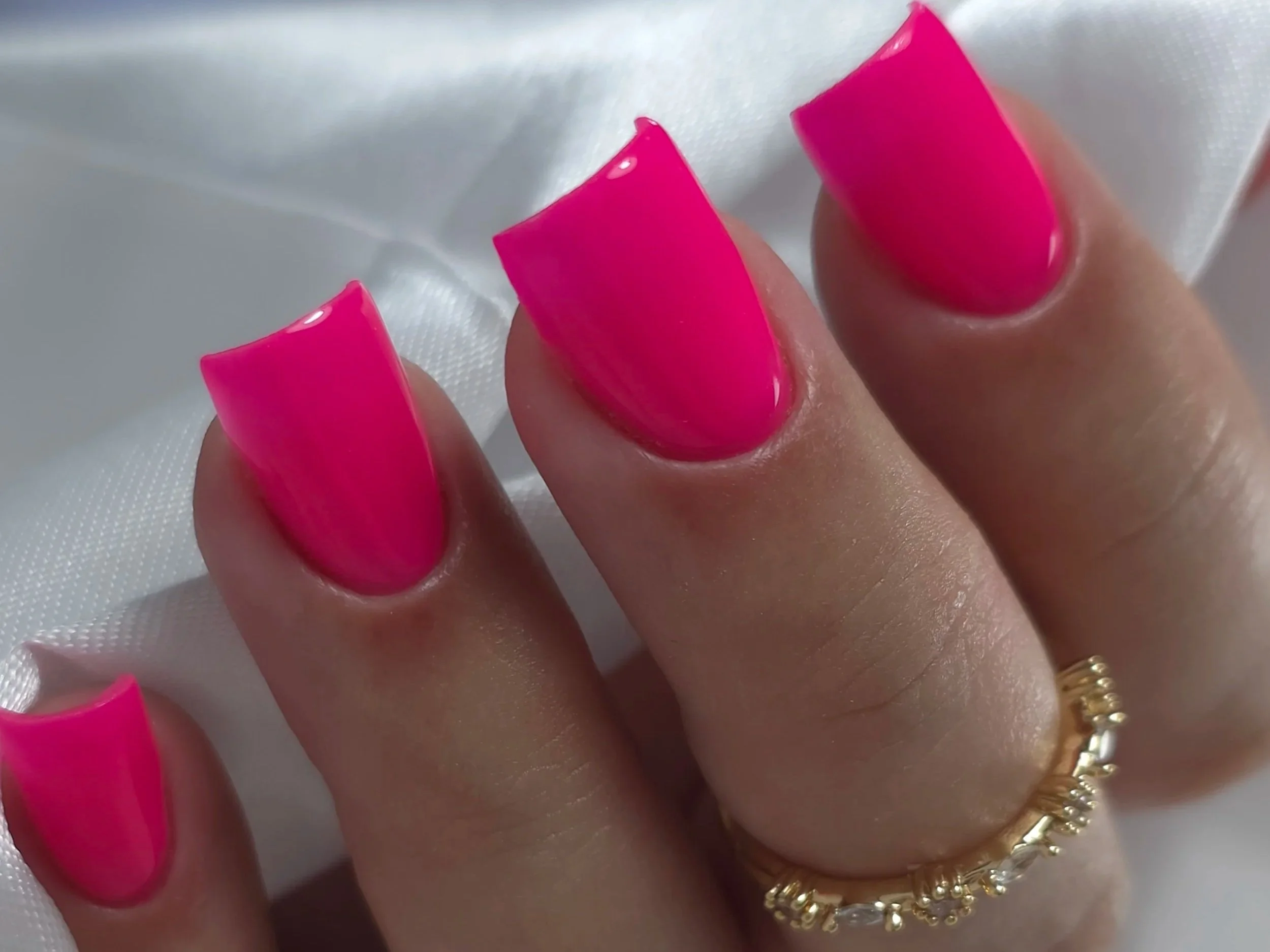
Can correct trapezoidal nails! – this technique can train nails that naturally flare out to grow straight. It takes time and commitment, so be prepared to commit to regular manicures for a while.
Existing splits can be repaired – the Hybrid technique can include products which can protect split nails till they’ve grown out
Suitable for clients wanting maximum longevity – if your priority is a manicure that stays looking freshly applied for several weeks, stronger gel manicures like this one may be the best option for you.
Once it’s cured, it’s cured – no accidental smudges or marks unlike with a nail polish manicure
Cons
Cannot be removed at home – hard gel must be professionally removed in order to avoid nail plate damage from improper removal. It does not come off with acetone.
Not suitable for long extensions – in some cases it can only be applied to the existing natural nail, and long extensions are not recommended for problematic nails.
Only suitable for established nail plate – due to the nature of the treatment, excessively short or bitten nails can become quite challenging to provide this treatment for.
Can you believe all the nails in the photos on the page are trapezoidal??
Check out below for this client’s one year nail journey - from trapezoidal bitten nails, to strong healthy NON-trapezoidal nails!
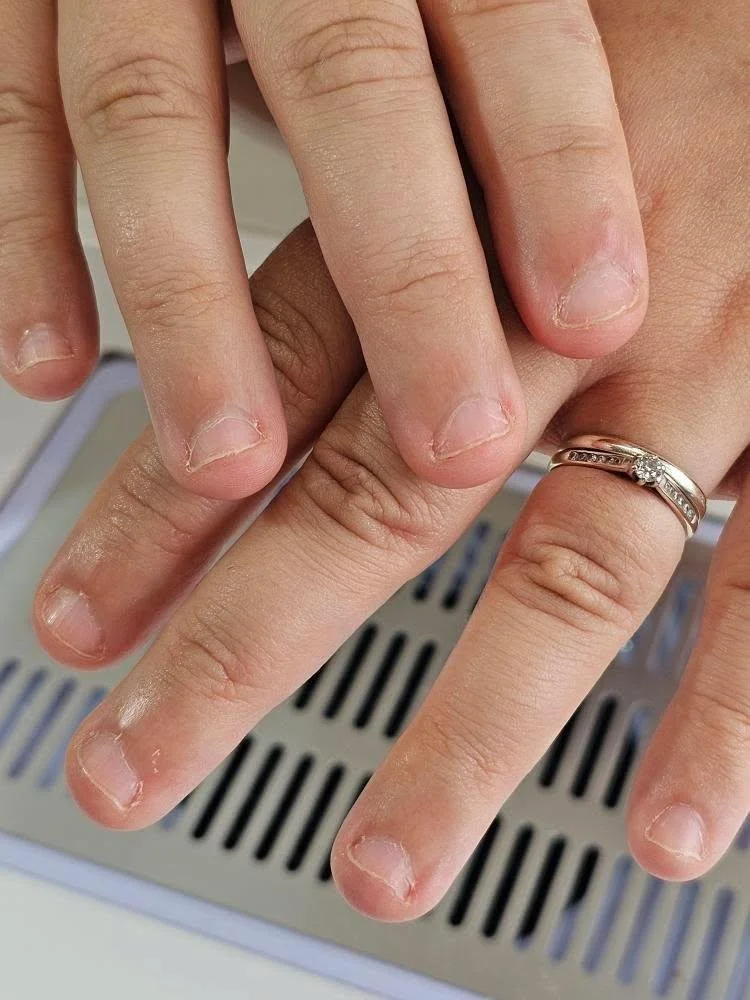
1. Before photo from client's first appointment
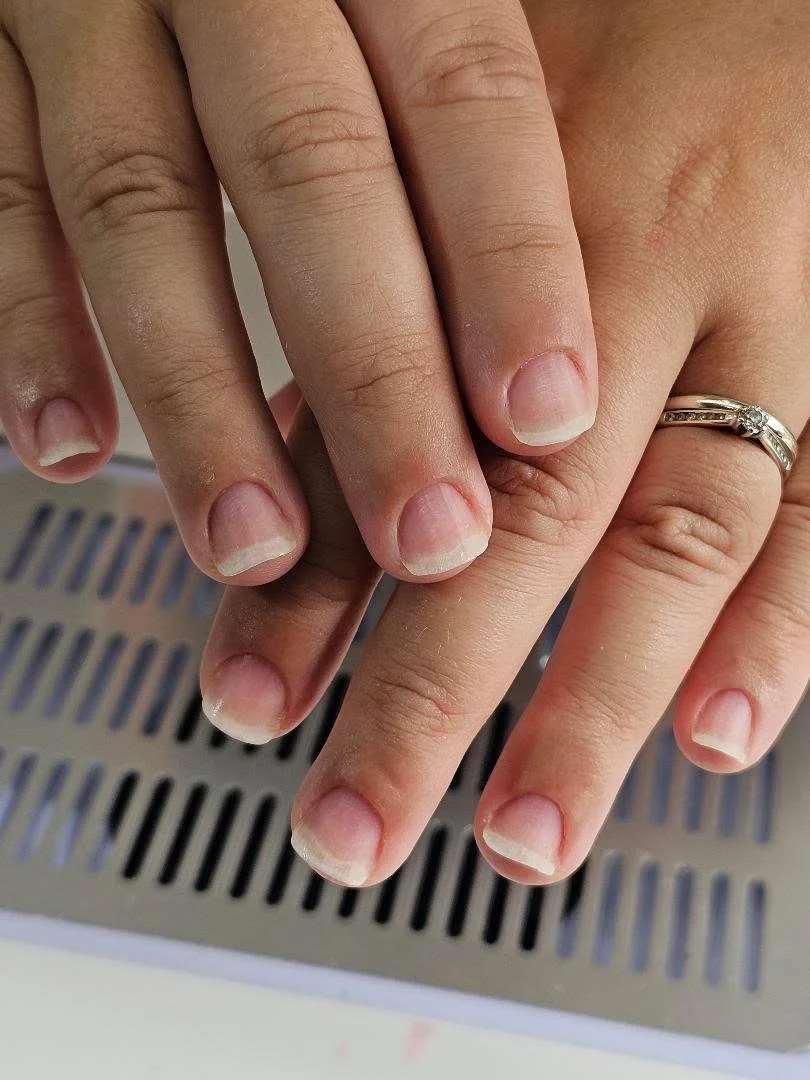
2. After Russian manicure prep at client's second appointment
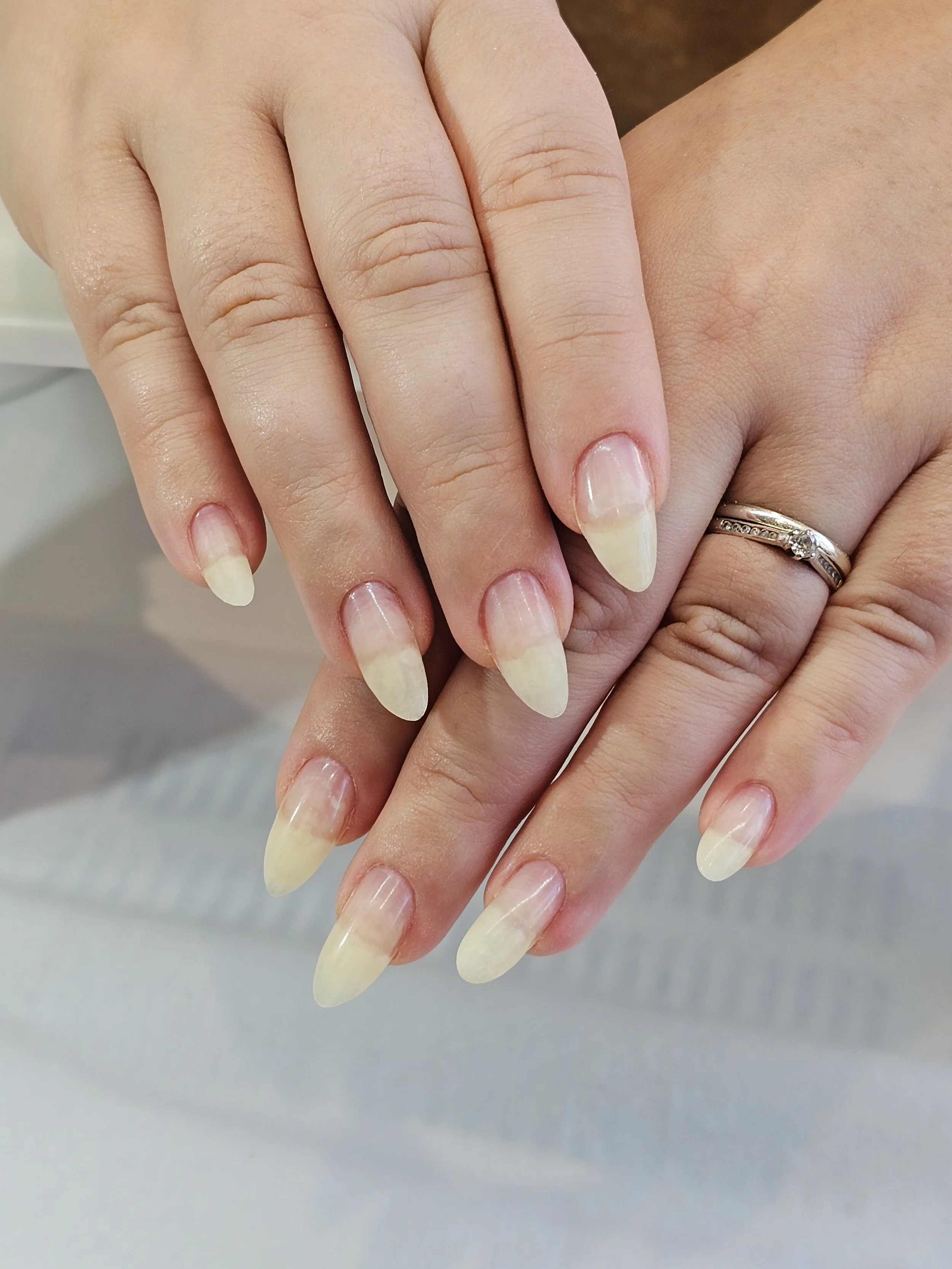
3. Client's natural nails 4.5 months in to regular treatments focusing on correcting nail structure and growth
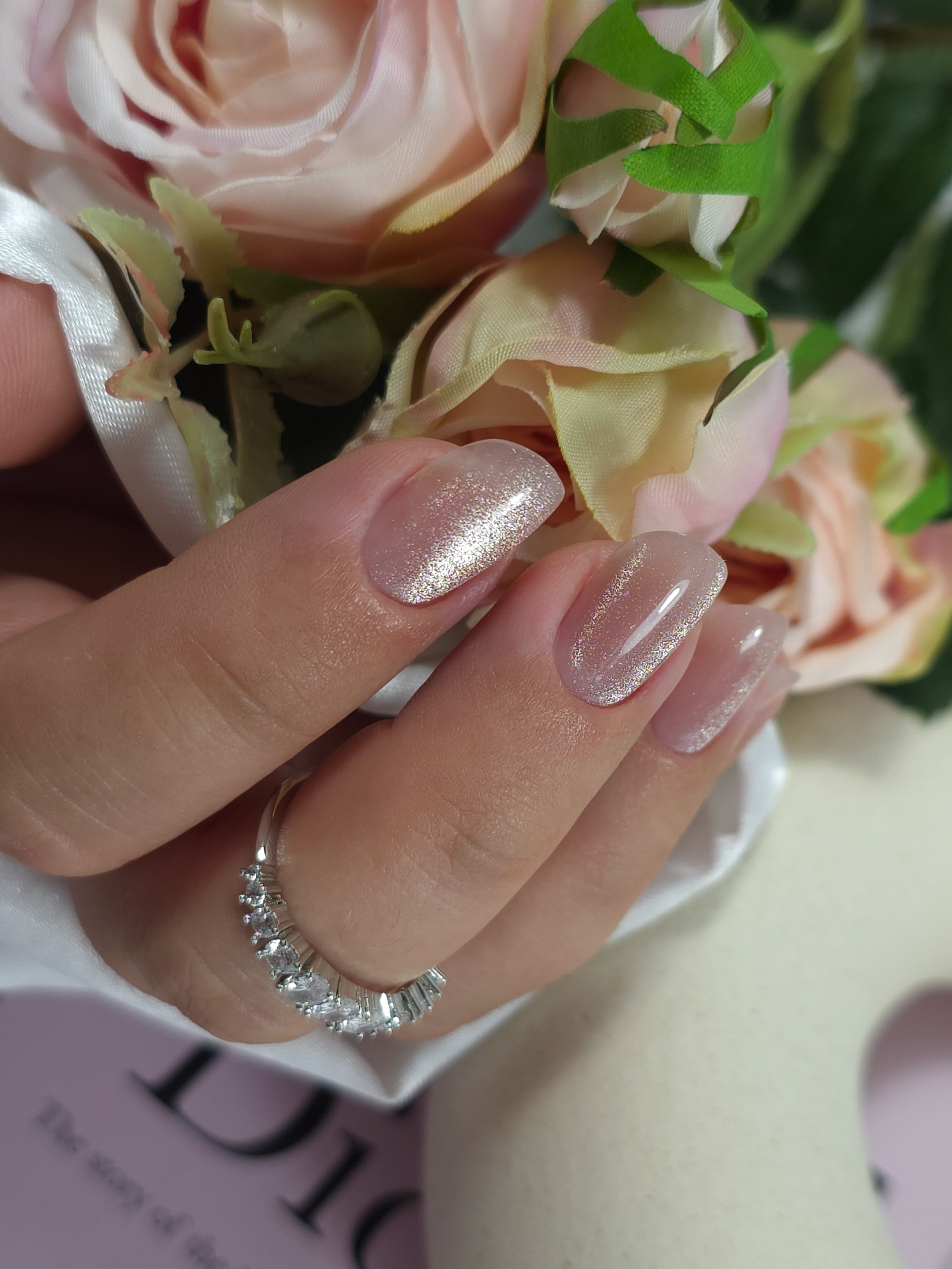
4. Client's nails now after one year of treatments, and no longer trapezoidal!