

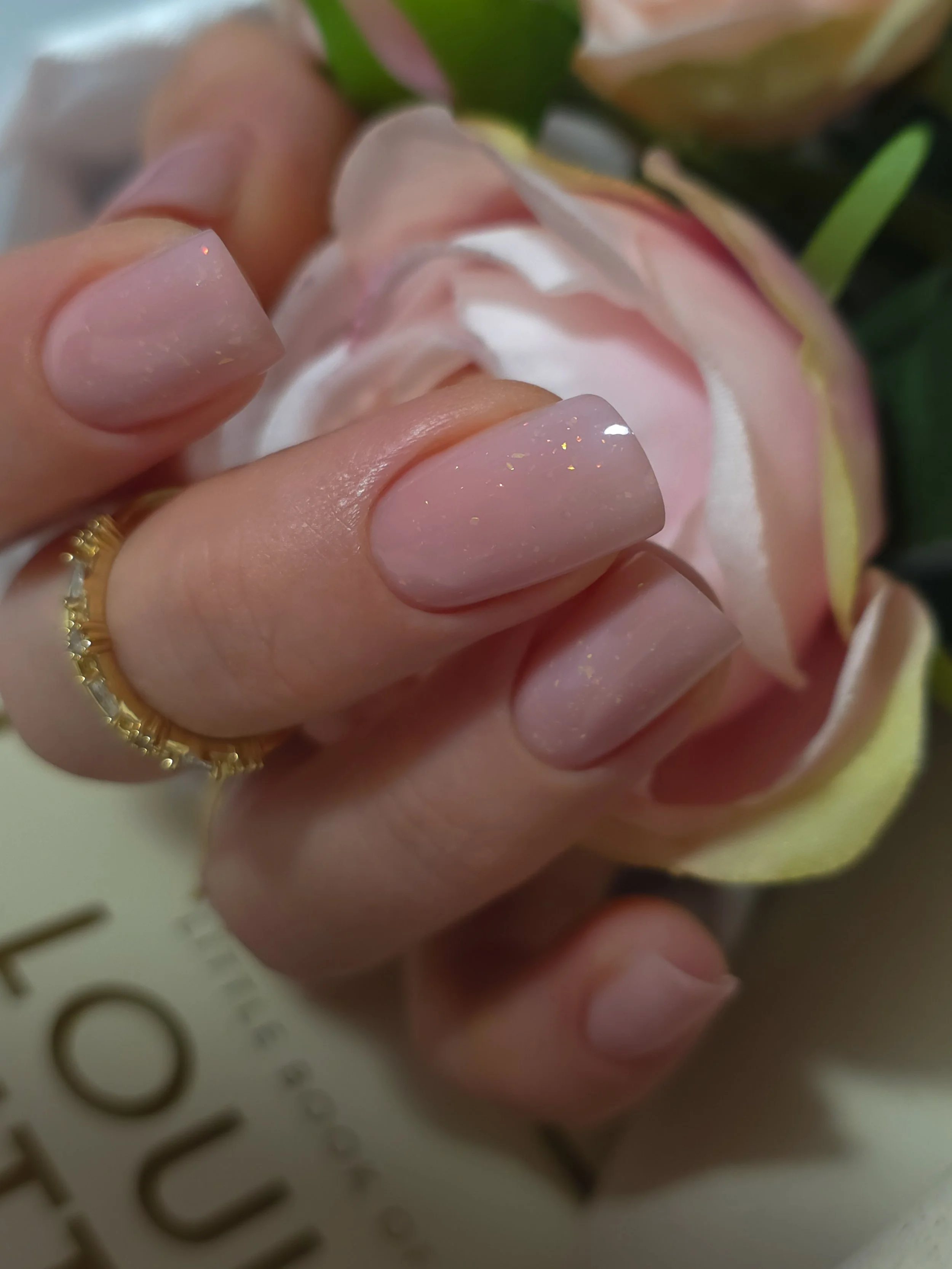
Hard gel overlay:
What is it, and why is it different to soft gel?
Struggled with retention before? This might be your solution.
Hard gel overlay
✳︎
Expert prep
✳︎
Photo-ready finish
✳︎
Perfect results
✳︎
Gel polish
✳︎
Hard gel overlay ✳︎ Expert prep ✳︎ Photo-ready finish ✳︎ Perfect results ✳︎ Gel polish ✳︎
-
There is one main difference that determines whether a gel is “soft” or “hard”, and it may surprise you to learn it isn’t actually how hard the product is!
The difference comes down to the specific formula, and how the chemical bonds react with acetone. Essentially, whether it can be soaked off or not!
Soft gel = can be soaked off using acetone
Hard gel = cannot be soaked off using acetone, and needs to be filed off instead.
This means hard gel must be professionally removed in order to avoid nail plate damage as a result of improper removal.
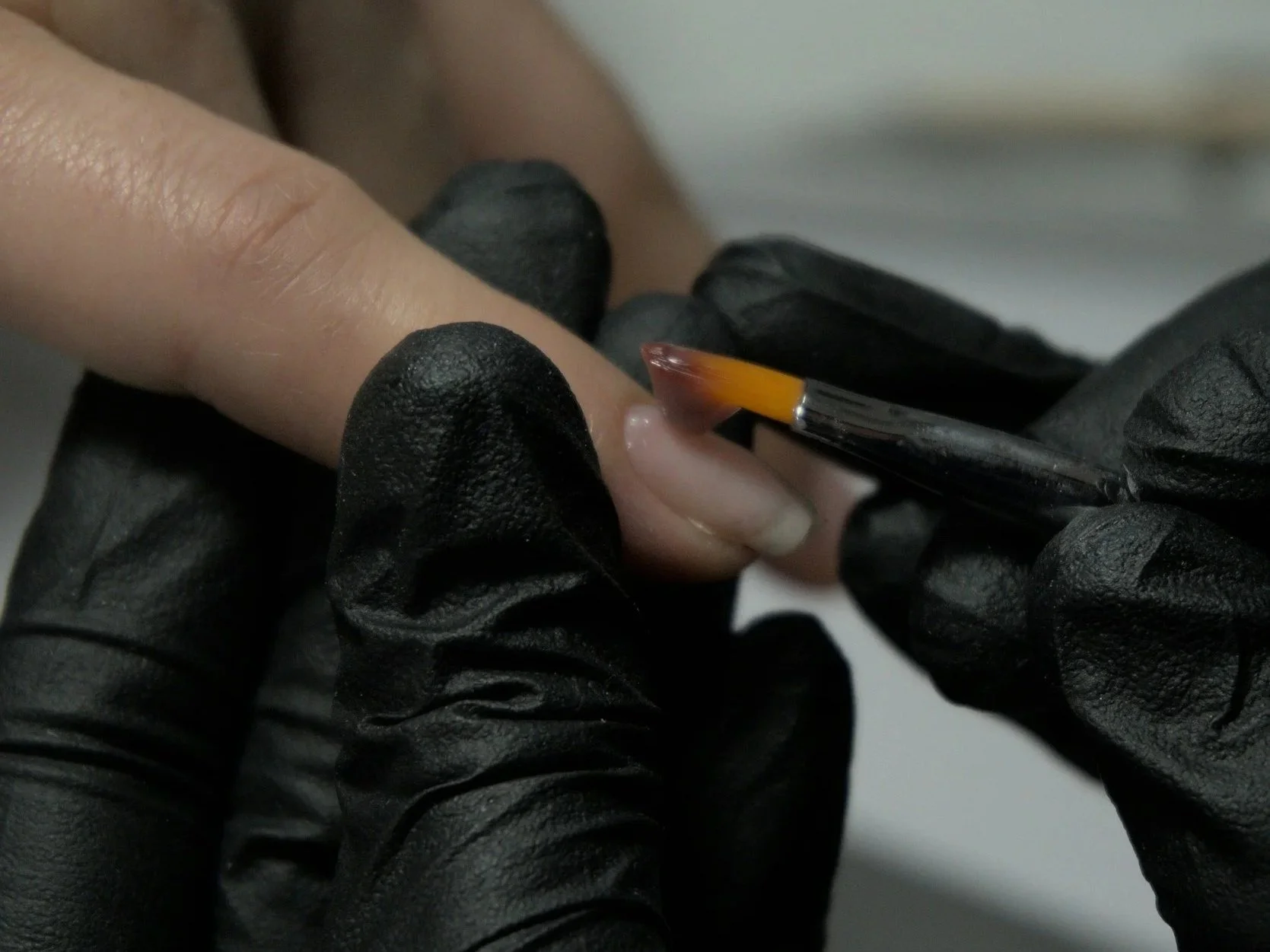
There is also a difference in the finish procedure for a hard gel manicure. Unlike a soft gel overlay where your natural free-edge remains in tact, a hard gel manicure requires your natural free-edge to be e-filed out once the product has been applied.
The reason for this is because the solid product will come away from your flexible natural nail plate as it grows, so removing the natural nail negates this risk ultimately improving retention.
-
Much like a standard and soft gel manicures, a hard gel manicure is also designed to be applied to an existing, suitable nail plate. If there are areas where the nail plate is missing, such as bitten nails, chips or breakages, a hard gel overlay may not be able to correct or support those areas. In some cases, this can also make it difficult to apply the product safely without it coming into contact with the surrounding skin.
There are a few simple things you can look at to get an idea of whether your nails are likely to be suitable for this treatment:
1. Do you have bitten or very short nails?
Hold your finger straight and parallel to the floor or ceiling and look at your nail from the side. Does the fleshy part of your fingertip sit higher than the nail plate?
If so, there may not be enough nail plate available for a standard gel manicure to be applied appropriately.
2. How do your side walls grow?
Look at your nail from above. Do the side walls run relatively parallel from the cuticle towards the free edge, or do they flare outwards as the nail grows?
You can also point your finger towards yourself and look directly at the nail from the tip. If the nail plate appears particularly flat or the side walls flare significantly, this can affect how suitable a treatment is for you.
3. Do you have any areas of nail lifting?
Look at where the free edge of your nail meets the skin at the sides. A small amount of white at the free edge is completely normal. However, if the white area appears to extend down the side walls rather than following the natural free edge, this can indicate that the nail plate has lifted from the nail bed (onycholysis).
If you notice anything that looks unusual, please don't worry or try to diagnose it yourself. I'll be able to assess your nails during your appointment and advise you on the most suitable treatment.
If your nails aren't suitable for a hard gel manicure, that doesn't necessarily mean you can't have beautiful, durable nails. There may be another treatment that is better suited to your individual nail shape, length or condition.
Take a look through my other treatment options to see what might be suitable for you, or get in touch if you're unsure which service to book.
-
Pros
Added strength – ideal if you want to maintain a short-medium length, but need extra support as the nails grow.
Existing splits can be repaired – unlike with a gel manicure, the hard gel overlay can include products which can protect split nails till they’ve grown out
Suitable for clients wanting maximum longevity – if your priority is a manicure that stays looking freshly applied for several weeks, stronger gel manicures like this one may be the best option for you.
Once it’s cured, it’s cured – no accidental smudges or marks unlike with a nail polish manicure
Cons
Cannot be removed at home – hard gel must be professionally removed in order to avoid nail plate damage from improper removal. It does not come off with acetone.
Not suitable for long extensions – it can only be applied to the existing natural nail and can only be used to add very minimal length.
Only suitable for established nail plate – due to the nature of the treatment, excessively short or bitten nails can become quite challenging to provide this treatment for.
Not suitable for overly flexible nails – overly flexible nails that require strength and additional support around the sidewalls will benefit more from the Hybrid technique.
All my manicure treatments include a Russian manicure as part of the prep routine.